There was a point when Friday night entertainment felt pretty predictable.
You picked a playlist, turned on your favorite television show, or maybe opened YouTube for a video spiral that somehow lasted three hours longer than planned. Entertainment had categories back then. Music stayed in one lane, gaming lived somewhere else, and livestreaming barely registered outside niche internet spaces.
Now? Everything feels blended together.
A DJ set can become a social event on your phone. Someone livestreaming from their bedroom can pull bigger crowds than traditional broadcasts. Fans jump between playlists, reaction videos, gaming streams, and creator content without really thinking about the switch.
Pop culture moved faster than people expected.
Streaming habits changed how audiences spend time online, although music culture deserves more credit than it gets. The visuals, the energy, and even the expectation that entertainment should feel immediate all helped shape the digital experiences people spend hours with today.
This shift has monumentally changed everything.
Audiences got used to watching everything live
One of the biggest entertainment shifts over the past decade came from something surprisingly simple – people started wanting to watch things happen in real time.
Music helped lead that change.
Back in the early days of livestreaming, online concerts were one of the first events to catch mainstream interest. Artists occasionally performed acoustic sets from home, DJs tested virtual performances, and fans gathered in comment sections simply because it felt new.
Then things accelerated.
Platforms built around live interaction exploded in popularity, especially among younger audiences already spending more time online. Twitch became a major entertainment destination, TikTok Live turned everyday creators into broadcasters, and livestream culture started influencing far more than gaming.
Music sat right in the middle of it.
Electronic music communities embraced livestreaming quickly. Boiler Room transformed DJ culture into something global, where fans watched performances unfold in packed rooms from thousands of miles away. During lockdown years, artists hosted livestream gigs that often pulled in millions of viewers.
The numbers tell an interesting story too. According to the International Federation of the Phonographic Industry, streaming made up around 69% of global recorded music revenue, showing just how central streaming habits have become to entertainment culture.
Entertainment slowly stopped feeling passive.
Entertainment that grew through livestreaming:
- DJ sets and listening parties
- Creator livestreams
- Fan reactions during album drops
- Behind-the-scenes content
- Interactive gaming broadcasts
And what’s really interesting is that that shift has changed expectations far beyond music.
Entertainment started feeling more interactive
As audiences grew comfortable with livestream culture, digital entertainment naturally became more social.
People got used to instant reactions, live comments, and experiences that felt slightly unpredictable. The polished, carefully edited feel of older content still mattered, but there was growing excitement around entertainment that unfolded in real time.
That crossover quietly reached gaming too.
You can see elements of streaming culture in live casino experiences, where real-time hosts, visual energy, and ongoing interaction feel closer to livestream entertainment than older digital formats. Fans of live casino content often compare the atmosphere to staying up late watching Twitch creators or live YouTube streams – there is movement, conversation, and a sense that something is actively happening.
That connection feels pretty natural when you think about it.
Modern audiences already spend hours watching streamers react to games, musicians improvise live, or creators chat casually with thousands of viewers. It makes sense that live casino experiences have found a place among people already comfortable with entertainment that feels immediate. Indeed, the switch toward live content in this area is almost a reimagining of the earlier casino halls, the palaces where people first fell in love with games like blackjack and roulette. Moving to live versions offers all the convenience of modern digital entertainment, without losing the magical human touch that was originally at the core of these games.
It has the further advantage that in the online world, people have learning resources at their disposal, meaning that they can pause and find something out if they feel unsure. In a physical casino, a beginner poker player might be struggling to understand bluffing, which is a really tricky element of the game to grasp. In the digital world, there’s an abundance of teaching content available at the click of a button. That means that this kind of entertainment has become more accessible, opening it up to far more people than before.
It’s fair to say that entertainment has become less about simply watching and more about feeling involved in the moment.
Music quietly changed the mood of digital spaces
Music influenced digital entertainment in ways people rarely stop to notice. Take a quick look at streaming culture, and certain visual trends keep appearing.
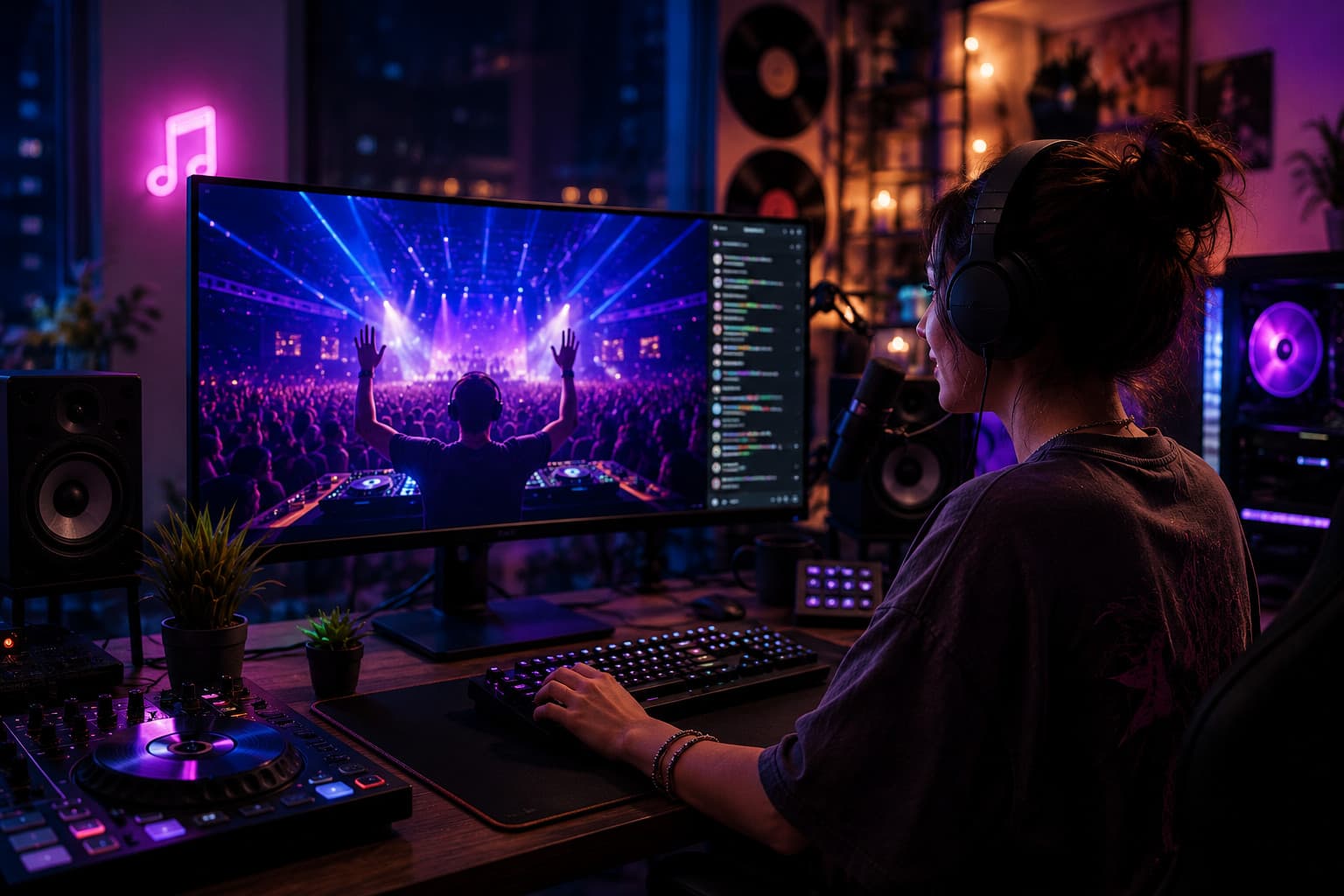
Neon lighting. Mood-heavy colors. Low-lit rooms glowing in purple or blue. Long playlists quietly playing underneath streams and gaming sessions.
The influence feels everywhere.
Lo-fi playlists became part of late-night studying, working, and gaming routines. Electronic music scenes pushed futuristic visuals into online spaces. Synth-heavy aesthetics drifted into creator content, gaming setups, and digital entertainment design.
Even livestreaming environments started reflecting music culture. Many livestream creators set up their recording spaces to feel more like relaxed studios than traditional television sets. LED lighting, ambient visuals, and curated playlists help shape an atmosphere people actually want to spend time in.
Entertainment became more about mood.
People no longer jump online for one quick thing before logging off. Sessions stretch longer. Someone listens to music while watching a stream, scrolls through social clips during downtime, and moves between different formats without noticing.
The lines blurred naturally.
Screens stopped separating entertainment
Entertainment categories feel far less strict now than they once did.
Music fans watch gaming content. Gaming audiences sit through livestream concerts. Creators build communities that mix humor, playlists, reaction content, and interactive sessions all in one place.
It all mixes together surprisingly easily.
How entertainment habits shifted
| Then | Now |
| Scheduled TV viewing | Always-on streaming |
| Listening alone | Shared online spaces |
| One entertainment format | Blended experiences |
| Passive watching | Interactive participation |
| Separate digital habits | Multi-screen routines |
That shift explains why audiences move so naturally between entertainment styles today. Somebody might start the evening with a playlist, end up watching livestream clips, and somehow finish the night inside an entirely different digital space without ever feeling like they changed activities.
The long and the short of this is that people enjoy feeling connected to something happening right now – whether that means watching a livestream concert, reacting alongside thousands of strangers during an album release, or spending time in digital spaces designed around interaction. That same appetite for real-time energy helps explain the growing interest around formats like live casino, where entertainment feels immediate and social in a way older digital experiences rarely did.
Once audiences got used to entertainment feeling active, it became difficult to go back. Scrolling through static content can fill certain types of time, but often, we’re looking for more; we’re looking for experiences that feel vivid and immersive, that help us lose ourselves in different worlds. And thankfully, that is what modern entertainment provides in a whole myriad of forms.